
How a Single Container Ship's Journey Reveals the Hidden Pulse of the Global Economy
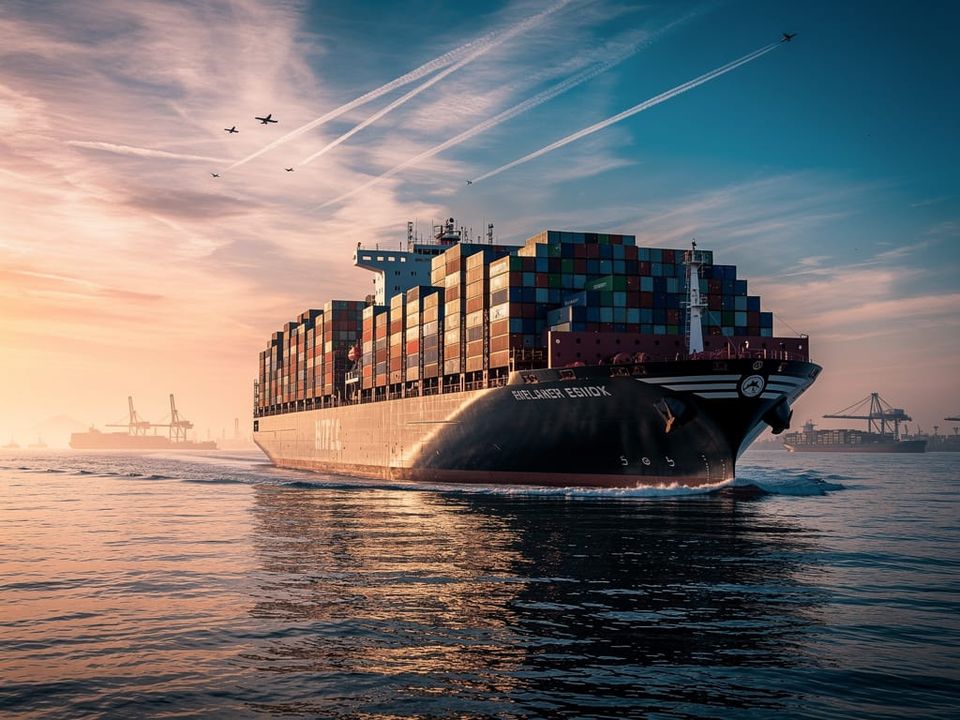
You watch the financial news. You see stock tickers flash green and red. You hear about GDP growth, inflation rates, and central bank decisions. It all feels abstract. Disconnected. You are looking at a shadow on the wall, not the object casting it. The real, tangible pulse of the global economy isn't a percentage point on a report. It's a 20-ton steel box, stacked nine-high on a ship the size of a skyscraper, cutting through the Pacific Ocean. You're about to learn how to see it.
Before: The Economy as a Wall of Numbers
Your current understanding of the economy is likely built on lagging indicators. You get data about things that have already happened. The quarterly GDP report tells you about the economic activity of the past three months. Unemployment figures reflect last month's job market. Corporate earnings show past performance. These are historical records, not forward-looking signals. It’s like trying to drive by looking only in the rearview mirror.
This perspective makes you a passive observer. You wait for experts on TV to interpret the data for you. You react to market swings after the big moves have already been made. You are consuming information, not generating insight. The numbers are a dense fog, obscuring the simple, physical reality of what the economy actually is: a system of making things and moving them to people who need them. You are missing the engine for the exhaust.
After: Seeing the World's Economic Arteries
Your view is now transformed. You see the global economy not as a spreadsheet, but as a massive, interconnected physical machine. A single container ship leaving Shanghai for Los Angeles is no longer just a ship. It is a floating report on Chinese manufacturing output and American consumer demand. The contents of its containers-electronics, furniture, clothing-tell a precise story about what the world is making and what it wants to buy. This is not theory. It is fact, packed in steel.
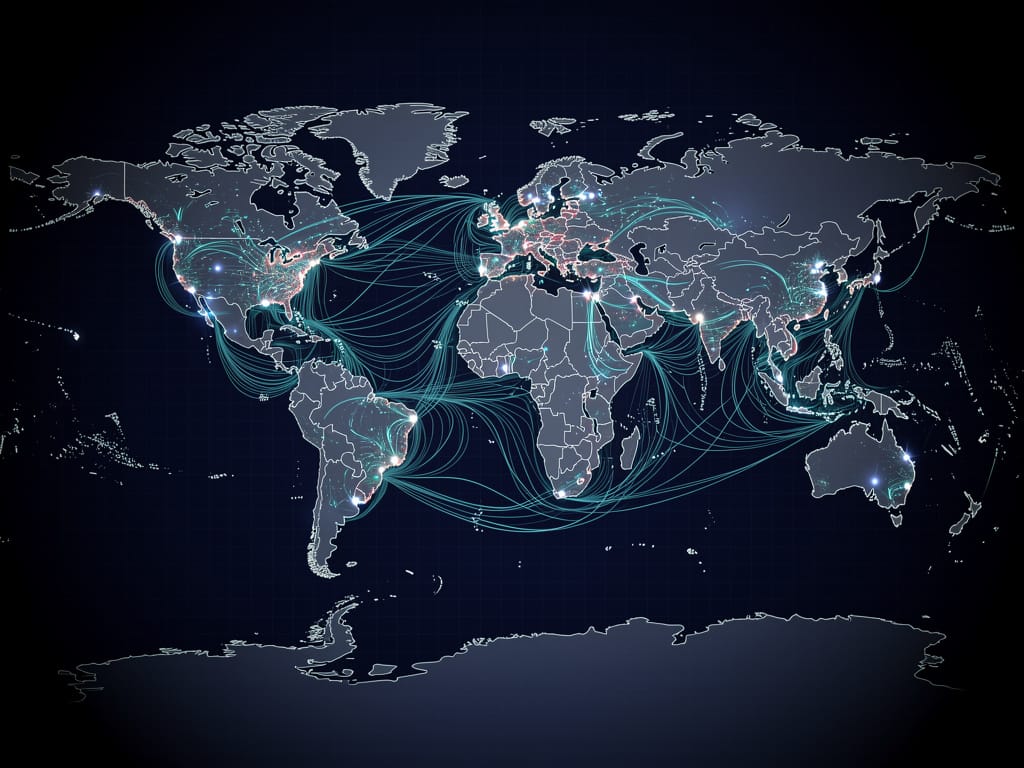
You now understand that major shipping lanes are the world's economic arteries. A traffic jam of tankers in the Strait of Hormuz is a direct signal about oil prices. A sudden spike in the cost to ship a container from Asia to Europe is a real-time inflation indicator. You are no longer waiting for a government report to tell you prices are rising; you can see the pressure building in the supply chain weeks or months in advance. You can spot the tremors before they become earthquakes.
The Bridge: How to Get There
Moving from the abstract to the physical requires new tools and a new focus. It is simple, direct, and requires no advanced degree. You just need to know where to look.
- Track the Chokepoints. The global economy has a few critical bottlenecks. The Suez Canal. The Panama Canal. The Strait of Malacca. Use a free, live vessel tracking site like MarineTraffic. Search for these locations. Look at the number of ships waiting to pass. A long queue is a physical sign of a global slowdown or disruption. It's a traffic jam for world commerce.
- Monitor Shipping Costs. Prices tell a story. The Freightos Baltic Index (FBX) tracks the daily cost of shipping a 40-foot container on major routes. The Drewry World Container Index (WCI) does the same weekly. When these indexes spike, it means demand for goods is overwhelming the capacity to move them. This is a powerful and early signal of future inflation.
- Watch Port Throughput. The world's biggest ports are the gates of the economy. Look up the monthly container volume (measured in TEUs, or twenty-foot equivalent units) for the Port of Los Angeles, the Port of Shanghai, and the Port of Rotterdam. A sustained drop in volume from an export hub like Shanghai means factories are slowing down. A surge at an import hub like Los Angeles means consumer demand is strong.
- Follow Raw Materials. Finished goods are only half the picture. Track the movement of bulk carriers transporting iron ore, coal, and grains. The destination of these ships tells you where the industrial foundations of the economy are being built. A surge of iron ore carriers headed to China, for example, signals a plan for major construction and manufacturing.
Forget the complex models for a moment. Stop waiting for last quarter's news. The global economy is a physical system, and its health is written in the wakes of massive ships crossing vast oceans. By tracking the containers, you track the cash. You are no longer just an observer of the economy. You are reading its pulse in real-time.