
Unveiling the Shadow Economy: How Dark Pools Quietly Influence the Stock Prices You See
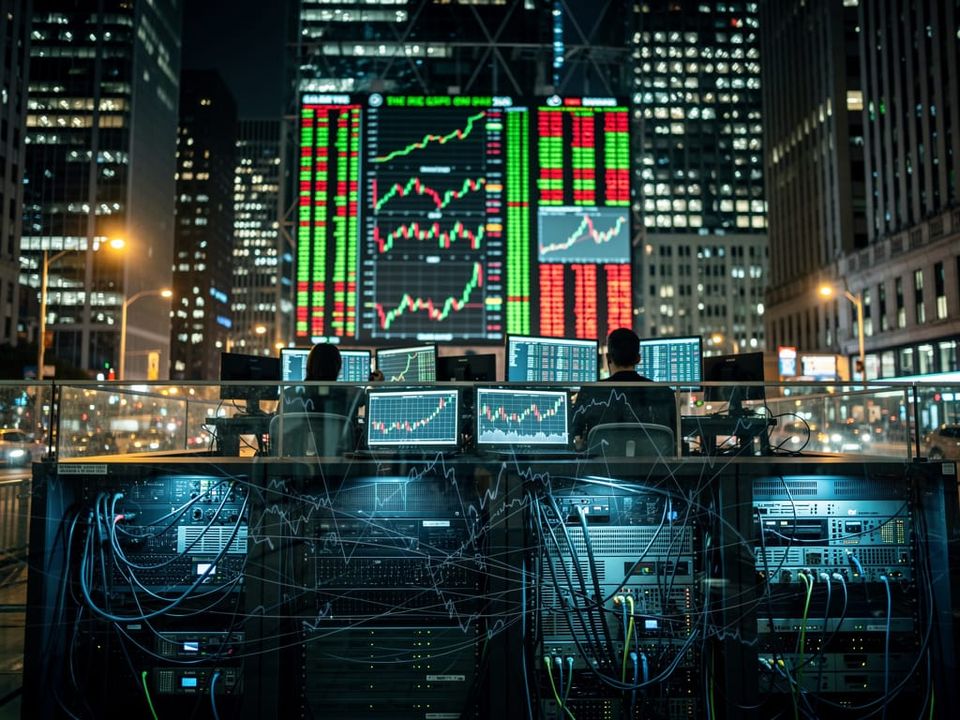
The stock price you see on your screen is not the whole story. Beneath the surface of public exchanges like the NYSE and NASDAQ exists a parallel financial universe known as dark pools. These are private exchanges, alternative trading systems (ATS) hidden from public view. Their purpose is straightforward: to allow institutional investors to execute enormous block trades without broadcasting their intentions to the wider market and causing immediate price fluctuations.
The Mechanics of Secrecy
Public stock exchanges operate on a principle of transparency. Their order books, showing buy and sell orders at various prices, are visible to all participants. Dark pools function in opposition to this, operating with complete pre-trade opacity. An institution wanting to sell five million shares of a company can place the order without anyone knowing, preventing a price collapse before the transaction is complete. This process of matching large buy and sell orders in secret is what gives these venues their name and their primary function in modern markets.
The main players are not retail investors. Dark pools are the exclusive domain of large financial institutions-pension funds, investment banks, and hedge funds managing colossal sums of capital. For them, signaling a large trade on a public, or 'lit', market is a tactical error. Other traders, especially high-frequency algorithms, would immediately trade against the order, driving the price down for a seller or up for a buyer. Dark pools offer a solution to this market impact problem, but they introduce a different set of complexities for the financial system.
The Influence on Public Prices
While trades are hidden before they happen, they must be reported to the public tape after execution. This delayed information still shapes market sentiment and prices, just with a lag. A significant portion of total stock market trading volume now occurs off-exchange in these dark pools. This diversion of trading activity effectively siphons liquidity from the public markets. For the average investor, this can mean wider bid-ask spreads and increased volatility, as the visible order book becomes a less reliable indicator of true supply and demand.
This environment also creates unique opportunities for sophisticated players. High-frequency trading (HFT) firms, for example, have developed strategies to detect large hidden orders within dark pools. They use small 'pinging' orders to uncover institutional activity, giving them an informational edge. This raises serious questions about whether dark pools truly level the playing field or simply shift the advantage to a different type of technologically advanced participant, leaving the retail investor at a persistent disadvantage.
A Question of Fairness
The existence of dark pools is one of the most contentious topics in modern finance. Critics argue they have created a fragmented and opaque two-tiered market. In this system, institutions get preferential treatment and access to better execution, while the public is left to trade on incomplete information. Regulators have taken notice, with bodies like the SEC implementing rules to increase transparency and ensure these private venues do not unfairly harm public price discovery.
On the other hand, proponents claim dark pools are essential for market function. They argue that without a way to execute large trades discreetly, big institutions would be unable to invest efficiently, which could harm the very pension and mutual funds that serve millions of people. This would force them to break up large orders into thousands of smaller ones, a costly and inefficient process. The debate centers on finding a balance between the legitimate needs of large investors and the foundational principle of a fair and transparent public market.
These hidden markets are a structural reality of our global financial system.