
How Wall Street Now Bets on Your Spotify Streams
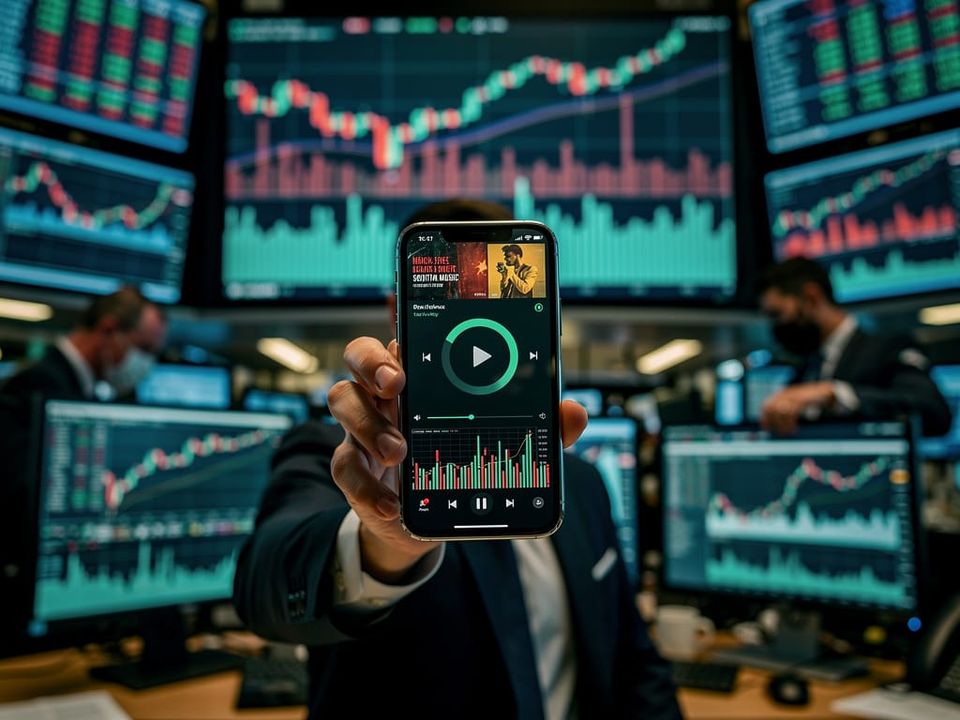
The songs you stream every day on platforms like Spotify and Apple Music are more than just background noise for your commute; they represent a new frontier for Wall Street. For decades, music catalogs were the domain of publishing houses and record labels. Today, they have been transformed into a sophisticated financial asset class, attracting institutional investors looking for stable, predictable returns in a volatile world.
This isn't about simply buying the rights to a classic album. The modern financial strategy involves bundling the future income from thousands of songs into complex securities. In essence, your decision to add a song to your workout playlist contributes to a stream of micro-payments that, in aggregate, becomes a tradable financial instrument. Wall Street has effectively found a way to place a bet on the enduring popularity of music.
The Mechanics of Music Royalties as an Asset
- From Individual Streams to Investable Income
The foundation of this entire market is the royalty payment. Every time a song is played, a small payment is generated and owed to the rights holders-the songwriter, composer, and publisher.- Streaming services like Spotify have made these income streams highly granular and trackable, providing a wealth of data on listening habits and song longevity.
- This data allows financial analysts to model future earnings with a high degree of confidence, treating a hit song much like a long-term utility contract.
- The aggregation of millions of these tiny payments creates a substantial and consistent cash flow, which is the key ingredient for any financial asset.
- The Securitization Process
The raw royalty streams are packaged into something investors can actually buy through a process called securitization, creating what are known as asset-backed securities (ABS).- Investment firms acquire the rights to large music catalogs, pooling the expected future royalties from thousands of different songs.
- This pool of future income is then used as collateral to issue bonds. Investors who purchase these 'music bonds' are buying a claim on those future royalty payments.
- This structure diversifies risk; the underperformance of a few songs is balanced by the steady earnings of timeless hits within the same portfolio.
Why Wall Street is Tuning In
- A Search for Uncorrelated Returns
One of the most attractive features of music royalties is their lack of correlation to the broader economic cycle. Financial markets can rise and fall, but music consumption remains remarkably constant.- People listen to music regardless of interest rates, inflation, or stock market performance, making it a defensive asset.
- For large portfolio managers, adding an asset that doesn't move in lockstep with stocks and bonds provides powerful diversification benefits and reduces overall portfolio risk.
- The Rise of Specialized Investment Funds
A new ecosystem of specialized funds has emerged to connect the music industry with capital markets. These firms have the expertise to value catalogs and manage the assets professionally.- Firms like Hipgnosis Songs Fund and KKR have invested billions to acquire the rights to catalogs from artists ranging from Shakira to Bob Dylan.
- These funds act as the market makers, providing the scale and due diligence necessary for large institutional investors to participate.
- They use sophisticated analytics to forecast a song's 'decay curve'-the rate at which its popularity and stream counts decline over time-to accurately price the asset.
What this all means is that your listening habits have become a data point in a global financial model. The transformation of music from a purely cultural product into a stable, cash-flowing asset marks a profound shift. It demonstrates how financial innovation can find value in unexpected places, turning the art you enjoy into an annuity for an investor's portfolio.