
How Shrinkflation Quietly Erodes Your Purchasing Power
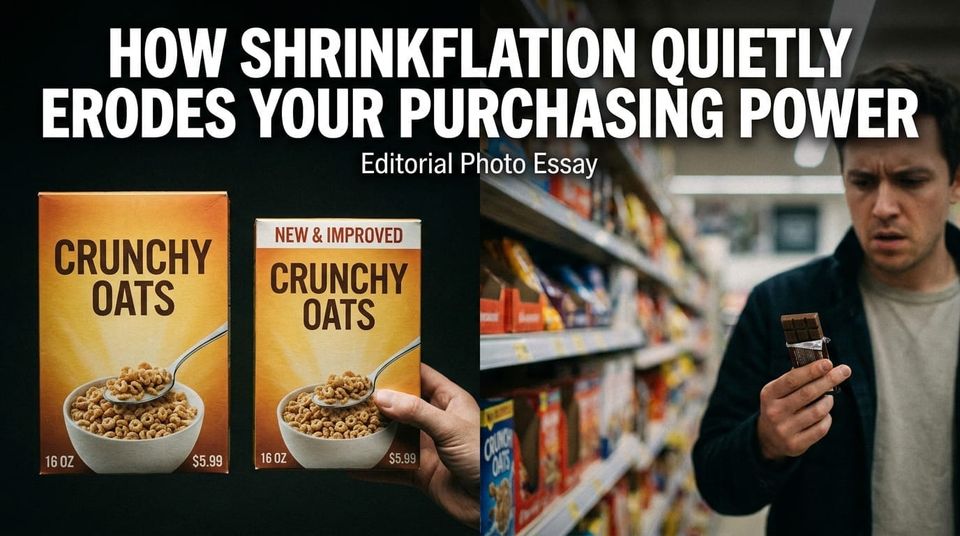
10 percent.
That’s how much smaller your 'half-gallon' of ice cream is today compared to a few years ago. The price on the shelf looks familiar, maybe even stable. But the container quietly shrank from a true half-gallon (64 oz) to 1.5 quarts (48 oz) or less. You’re paying the same for less product, and this silent economic sleight-of-hand is happening in nearly every aisle of the grocery store. You feel its effect every time your pantry empties faster than it should, but you can’t quite put your finger on why. It’s time to see the trick for what it is.
Before: The Price Tag Mirage
You walk the grocery aisles on autopilot. You know your brands, you know the packaging, and you have a general sense of what things 'should' cost. When you see your favorite coffee, cookies, or toilet paper for the same price as last month, you feel a small sense of relief. In a world of rising costs, at least some things are holding steady. Or so you think.
But then weird things start happening. The family-size bag of chips seems to disappear in one evening. The new roll of paper towels fits a little too loosely on the holder. You swear you used to get one more bowl of cereal out of that box. You’re not imagining it. You’re experiencing the slow, steady drain of shrinkflation. It’s a strategy designed to bypass your price-hike alarm bells, making you feel like your budget is failing you, when in reality, the products themselves are.
After: The Empowered Shopper
Imagine walking into that same store, but now you see the matrix. You don’t just see the big, friendly price number; your eyes are immediately drawn to the fine print on the shelf tag: the unit price. You see the cost per ounce, per sheet, per pound. The packaging and brand logos are just noise. The real data, the truth of the value, is right there in plain sight.
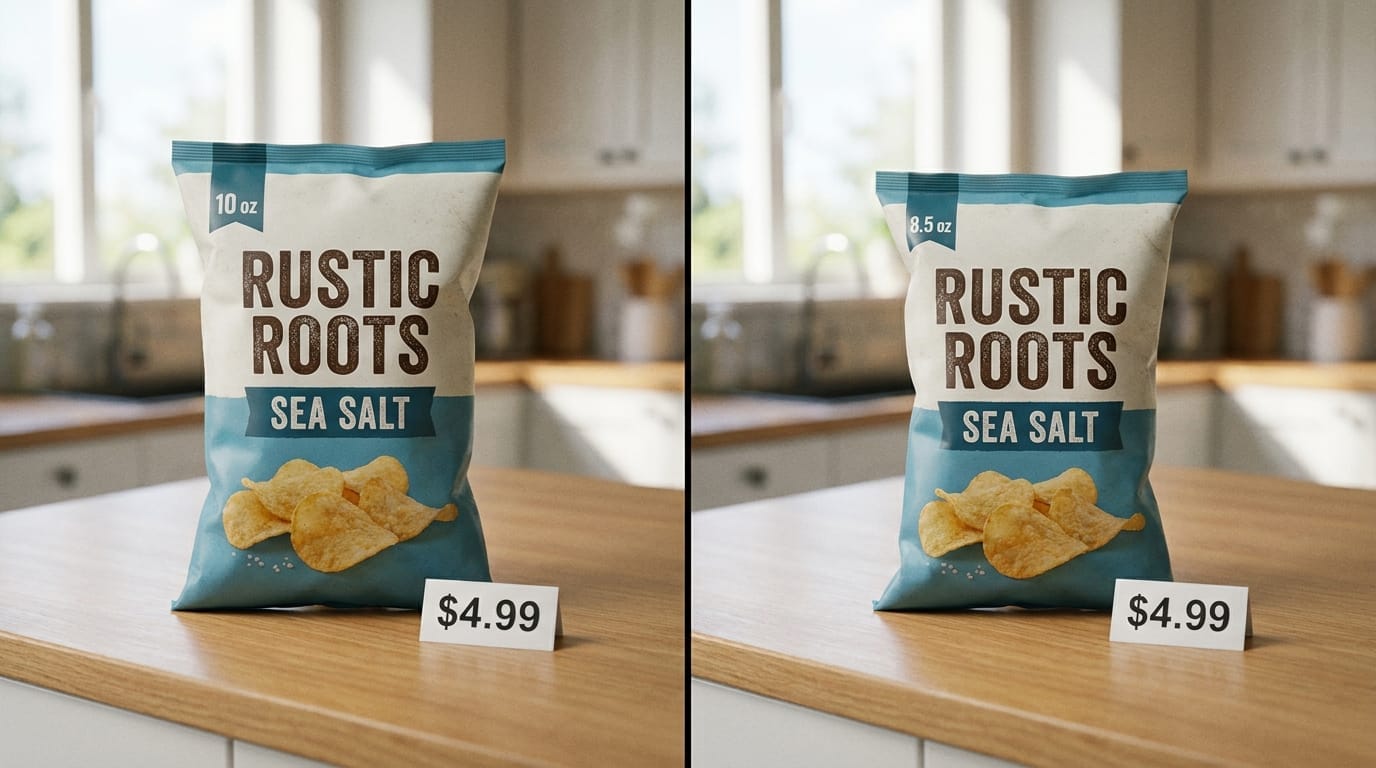
You can now compare two different-sized boxes of pasta from competing brands with total clarity. You spot when a 'New Look!' label is hiding a 15% reduction in product. You are no longer a passive victim of clever marketing. Instead of feeling confused and frustrated at checkout, you feel strategic and in control. Your purchasing power isn’t something that’s being eroded without your consent; it’s a tool you are actively wielding to get the absolute most for your money.
The Bridge: How to Get There
Moving from a frustrated consumer to an empowered one doesn’t require a degree in economics. It just requires a shift in what you pay attention to. The bridge is built with awareness and a few simple habits that expose the real value of what you’re buying.
- Master the Unit Price. This is your single greatest weapon. On almost every shelf tag, you’ll find the price broken down into a standard unit (like cents per ounce or dollars per pound). Ignore the sticker price and compare the unit price. The lowest number is always the better deal, regardless of box size or branding.
- Become a Product Historian. Trust your gut. If a package feels lighter or looks smaller, it probably is. Pay attention to the net weight or volume printed on your favorite items. When the packaging gets a 'facelift', check the numbers. They’ve almost certainly changed.
- Give Store Brands a Serious Look. Private-label or store brands are often the last to shrink and the first to offer a clear value proposition. Use them as your baseline. If the name brand is offering 15% less product for 20% more cost per ounce, the choice becomes obvious.
- Look for Old Packaging. Sometimes, when a product shrinks, the old, larger versions are still lingering on the back of the shelf. If you spot one, grab it. It’s like finding free money.
That 10% isn’t just missing ice cream. It’s in your coffee can, your box of crackers, and your bottle of juice. It’s the quietest ten percent you’ll ever lose… unless you decide to start listening for it.