
Beyond the Billboard: Deconstructing the Secretive, High-Stakes Market of Hollywood Product Placements
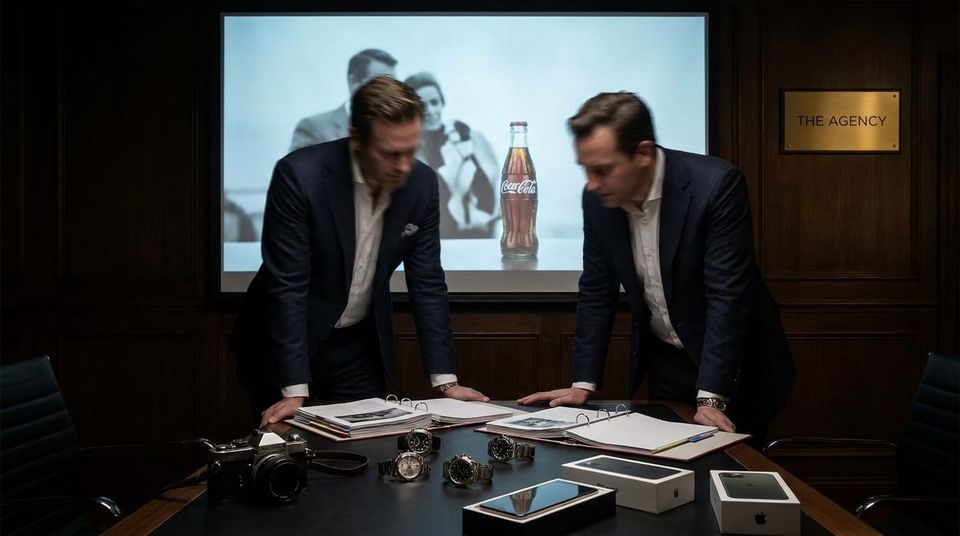
$29 billion. That’s the number. It’s not the GDP of a small country or the Pentagon’s budget for a new jet. It’s the amount of money that changed hands last year in the global product placement market. While you were thinking about the Super Bowl ads, an entire economy larger than the entire music industry of North America was operating silently inside your favorite movies and TV shows.
This isn't about a character happening to drink a Coke. This is a calculated, high-stakes transaction. Getting a brand featured in a single major film can cost anywhere from $50,000 for a passive background shot to well over $1 million if a main character interacts with it. And unlike a 30-second commercial you can skip, these placements are woven directly into the story you paid to see.
The Invisible ROI
Why do companies pay? Because it works with frightening efficiency. Your brain has been trained to tune out traditional commercials, but it's wide open during a tense movie scene. Studies show that brand recall can jump by more than 20% following a well-executed placement. That's a massive lift compared to digital ad campaigns, where the average click-through rate is a dismal 1.91% on search networks.
And this market is accelerating. Just ten years ago, the entire industry was worth less than half of what it is today. Projections show it growing at a compound annual growth rate of 13.7%, completely outpacing traditional ad spending. The billboard is dying... but the brand integrated into the plot is just getting started.
The Modern Placement Playbook
The strategy has become incredibly sophisticated. It’s no longer just about getting the logo on screen. It’s about creating an association so deep, you don’t even notice the persuasion.
- Streaming services are supercharging this trend. In a single year, Netflix reportedly featured over 3,500 product integrations, turning its original content into a massive, subtle marketplace.
- The automotive industry is the undisputed king of placement. Cars account for nearly 25% of all brand appearances in number-one box office movies in the U.S. That's no accident.
- The market extends far beyond your TV. Product placement in video games is now a standalone industry worth over $11 billion, embedding brands into the interactive worlds where millions of people spend their time.
- Subtlety costs. A static placement, like a phone sitting on a table, is the entry-level package. Having a character hold and use that same phone can increase the fee by an average of 30-40%.
This all works because it masterfully bypasses our cynicism. Research from PQ Media shows that while nearly 75% of viewers can identify a product placement, they find it significantly less intrusive than a traditional commercial break. Brands aren't interrupting the story anymore; they are becoming the story, and we are paying for the privilege of watching their ad.
The next frontier is already here. Companies are using AI to digitally insert products into shows *after* they’ve been filmed. This 'virtual product placement' technology means the bottle of water on an actor's table could be one brand for you and a different one for a viewer in another country, all based on your data. This segment alone is projected to be worth $75.6 billion by 2032.
The point isn't that brands are trying to sell you things. We know that. The real takeaway is recognizing the invisible economic architecture built into the media you consume. That $29 billion isn't just a marketing budget; it's a global, coordinated investment in shaping your preferences and perceptions, often when your guard is completely down. It subtly engineers your reality, one strategically placed laptop or luxury watch at a time.
So, become an active viewer. When you see that perfect car in the chase scene or that specific computer in the hero's office, see the transaction behind it. This isn't about ruining the magic of movies. It's about financial literacy in a world where attention is the most valuable commodity. Because the most expensive thing in that scene isn't the explosion... it's the beer bottle in the character's hand.